
The marketing technology landscape has accelerated from rule-based automation to systems that think, learn, and act. For growth-focused businesses—especially SMBs—this evolution presents a defining choice: continue patchworking manual automations or adopt truly autonomous marketing engines that deliver consistent, data-driven outcomes. ActiveCampaign’s autonomous marketing suite positions itself as the next step: a platform that pairs AI agents, real-time intelligence, and purpose-built workflows to automate not just tasks but strategy. This guide explains why traditional automation is no longer enough, how ActiveCampaign defines and delivers autonomous marketing in 2026, and how you can implement it to drive measurable performance gains.
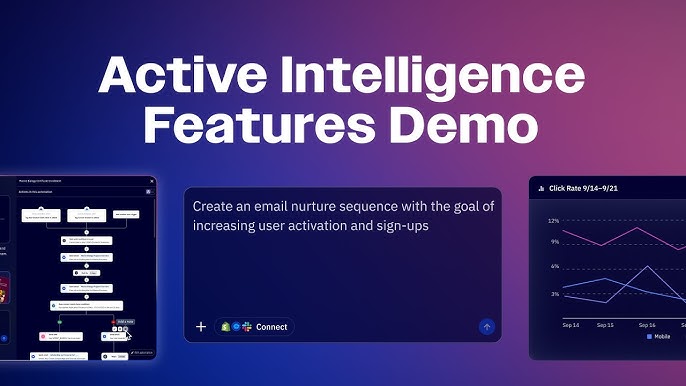
The Evolution of MarTech: Why Traditional Automation is No Longer Enough
Automation transformed marketing by removing repetitive work: scheduled emails, triggered messages, and lead scoring. But automation alone is inherently reactive and brittle. It follows rules you define; it does not question whether the rules are still optimal. As customer expectations and channel dynamics accelerate, static automations break down:
- Fragmented customer experiences. Static sequences can’t synthesize cross-channel signals fast enough—resulting in inconsistent messaging across email, SMS, chat, and ads.
- Diminishing returns. Added complexity (more rules and segments) yields smaller incremental gains and higher maintenance costs.
- Slow learning loops. Traditional A/B testing and manual optimization cycles lengthen time-to-impact and drain scarce marketing resources.
In short: automation does tasks; autonomous marketing optimizes outcomes. The businesses that win are those that replace brittle, manual logic with systems that observe, predict, and adapt continuously.
Defining Autonomous Marketing: How Active Intelligence Differs from Basic AI
“Autonomous marketing” is more than applying machine learning to segmentation or personalization. It’s an operational paradigm in which intelligent agents collaborate to make decisions, execute tactics, and measure impact—without constant human intervention. ActiveCampaign’s approach centers on three distinctions:
- Purpose-built intelligence vs. generic AI: Rather than general-purpose models, ActiveCampaign uses marketing-specific agents trained and optimized for campaign strategy, content generation, and performance optimization.
- Closed-loop autonomy vs. isolated predictions: Predictions feed actions automatically; outcomes feed back into models. This continuous loop enables rapid, evidence-based adjustment across channels.
- Human-in-the-loop governance: Autonomy does not mean zero oversight. Human experts set business constraints, quality guardrails, and have review controls—ensuring alignment with brand and compliance requirements.
This combination of domain focus, closed-loop learning, and controlled autonomy is what separates ActiveCampaign’s “active intelligence” from basic AI features.
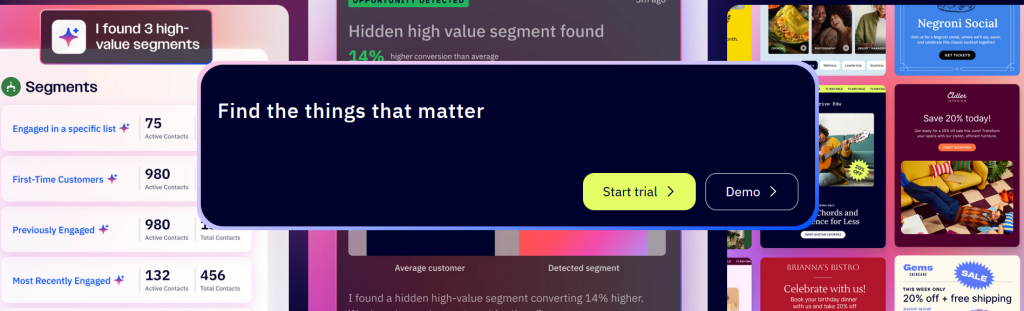
The 3 Core Pillars of ActiveCampaign’s Autonomous Ecosystem
ActiveCampaign’s autonomous proposition rests on three integrated pillars:
- Strategy & Orchestration Agents
These agents translate business objectives into executable multi-channel strategies—allocating budget, prioritizing customer cohorts, and sequencing campaigns for lifetime value rather than short-term metrics. - Content & Creative Agents
Automated copywriting, creative variants, and content adaptation—optimized for channel, persona, and intent—so messaging remains consistent and high-quality across touchpoints. - Performance & Prediction Agents
Real-time analytics, propensity modeling, and predictive optimization that continuously adjust campaigns to maximize key outcomes (revenue per contact, conversion rate, retention).
Together they form an ecosystem that plans, executes, and optimizes—reducing operational overhead and increasing marketing velocity.
How the Strategy Agent Replaces Manual Workflow Building
The Strategy Agent in ActiveCampaign is designed to replace rule-heavy, manually maintained workflows with intent-driven orchestration. Instead of constructing dozens of conditional branches for every customer journey, you define high-level objectives (e.g., acquire 1,000 MQLs with an average CAC below X, or increase 90-day retention by Y%). The Strategy Agent:
- Analyzes historical performance and current audience signals
- Prioritizes channels and tactics based on expected ROI
- Generates and deploys experiment sets
- Monitors outcomes and reallocates effort dynamically
This reduces time-to-launch from weeks to hours and minimizes the maintenance overhead that traditionally bogs down teams as complexity grows.
Maintaining Brand Integrity with the ActiveCampaign Content Agent
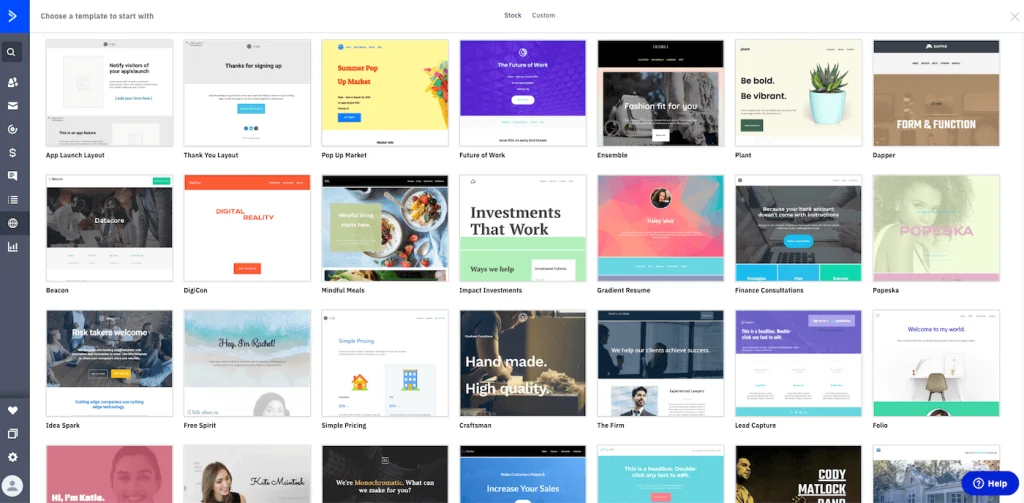
One common concern with machine-generated content is brand drift. ActiveCampaign addresses this with a Content Agent that includes:
- Brand voice profiles: Define tone, terminology, and style rules the agent must follow.
- Quality filters and human review queues: Ensure sensitive content or critical messaging is reviewed before live deployment.
- Multi-format adaptation: Convert primary messaging into channel-optimized variants (emails, SMS, landing pages, ad headlines) while preserving core brand attributes.
The result: faster content production without sacrificing consistency or quality—essential for scaling campaigns across channels.
Real-Time Performance Intelligence: Predictive Optimization vs. A/B Testing
Traditional A/B testing is valuable but inherently slow and narrow: it isolates one variable at a time and waits for statistically significant results. Predictive optimization uses models to estimate the expected uplift of many variants and then acts on those estimates in real time. Benefits include:
- Faster iteration: Optimization happens continuously as models learn from new data.
- Multi-variable improvements: Models account for interactions across subject lines, send times, channels, and offers.
- Efficient exploration/exploitation balance: Systems test high-potential variants while exploiting known winners to maximize ongoing performance.
In practice, ActiveCampaign blends controlled experiments with model-driven decisions, preserving statistical rigor while accelerating impact.
Case Study: Achieving 20% Performance Gains in the First 90 Days
Summary
A mid-market e-commerce business used ActiveCampaign’s autonomous suite to improve post-purchase engagement and repeat purchase rates.
Baseline
- Monthly revenue: $400K
- Repeat purchase rate (30–90 days): 12%
- Marketing team: 3 people
Approach
- Strategy Agent set objectives to increase 90-day repeat purchases by 20%
- Content Agent generated personalized cross-sell sequences and optimized product-focused landing pages
- Performance Agents ran predictive optimization on send cadences and pricing incentives
Results (90 days)
- Repeat purchase rate increased from 12% to 14.4% (+20%)
- Monthly revenue uplift: $24K (6% increase)
- Time saved on campaign management: ~40 hours/month
Why it worked
The closed-loop system focused on the most influential levers—timing and personalized offers—while continually adapting creative and channel mix based on live performance signals.
Setting Up Your Autonomous Engine: A Step-by-Step Implementation Guide
- Clarify business objectives: Define the KPIs the autonomous system will optimize (LTV, CAC, retention, revenue per contact).
- Prepare your data: Ensure customer data (behavioral, transactional, and demographic) is centralized and clean. ActiveCampaign’s integrations simplify this, but data quality impacts model performance.
- Establish brand and compliance guardrails: Create voice profiles, privacy rules, and escalation paths for sensitive campaigns.
- Start with a pilot: Choose a high-impact use case (welcome series, cart recovery, or win-back) and run the Strategy Agent in guided mode.
- Review & refine: Use the built-in dashboards to review decisions, approve creative templates, and adjust constraints.
- Scale incrementally: Expand autonomy to additional customer lifecycle stages and channels once performance stabilizes and guardrails are validated.
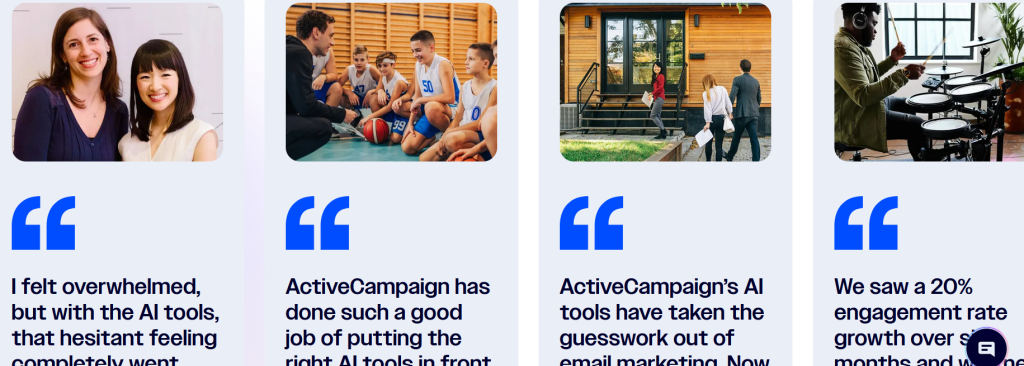
Maximizing ROI: How SMBs Can Outperform Enterprises with AI Agents
SMBs often have two advantages: agility and closer customer relationships. Autonomous marketing magnifies these advantages:
- Faster deployment cycles allow SMBs to test and learn more rapidly than enterprise counterparts trapped in approval processes.
- The resource-efficiency of agents substitutes for large teams—allowing SMBs to achieve enterprise-grade personalization at a fraction of the cost.
- Lower overhead: Autonomous optimization reduces wasted spend and manual maintenance, improving marketing ROI.
For SMBs, autonomous marketing is not just a tool—it’s a force multiplier that levels the playing field.
Future-Proofing Your Career: Transitioning from Automation Engineer to Marketing Architect
As tools become more autonomous, roles shift from executing manual flows to designing objectives, governance, and strategy. The marketing architect’s responsibilities include:
- Defining KPIs and acceptable risk thresholds for agents
- Designing experiments and success metrics at the program level
- Managing ethical considerations and compliance
- Translating business goals into constraints the system can act within
Upskilling toward data literacy, AI governance, and strategic thinking will be crucial for professionals who want to lead in the autonomous era.
Market Comparison: Why ActiveCampaign Leads the Autonomous Space in 2026
ActiveCampaign’s strengths in 2026 stem from a combination of domain expertise, integrated agent ecosystem, and SMB-first usability:
- Purpose-built marketing agents vs. general ML toolkits offered by some competitors
- Tight integration across email, SMS, CRM, and ad channels that enables true cross-channel autonomy
- Built-in guardrails and human-in-the-loop workflows that balance autonomy with control
- Transparent performance reporting and closed-loop learning that accelerates measurable business outcomes
While other vendors may offer components—AI copywriters, predictive scoring, or experimentation layers—ActiveCampaign packages these into an operationally coherent system focused on end-to-end marketing outcomes.
Overcoming AI Adoption Barriers: Security, Privacy, and Control
Common adoption concerns are legitimate and solvable:
- Security: ActiveCampaign provides enterprise-grade encryption, role-based access, and SOC-compliant controls. For sensitive data, organizations can set strict processing rules and limited data retention.
- Privacy: Built-in consent management and data minimization features help ensure compliance with GDPR, CCPA, and other regulations.
- Control: Human-in-the-loop modes, approval queues, and explainable decision logs ensure teams retain oversight and can audit agent decisions.
Addressing these elements early in implementation reduces friction and builds organizational trust.
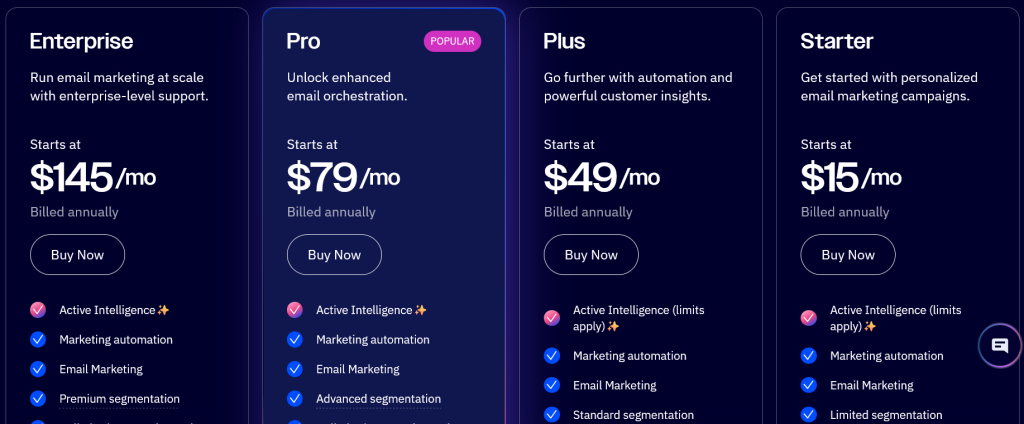
ActiveCampaign’s Pricing Plans: Ready to Join the Success Train?
ActiveCampaign offers tiered plans designed to scale with business needs. Key considerations when evaluating plans:
- Feature availability: Ensure the plan includes the autonomous agents and cross-channel integrations you require.
- Contact and volume limits: Gauge expected sends, contacts, and usage to avoid surprises.
- Support level: Higher tiers include dedicated onboarding, account management, and priority support—valuable during autonomous rollouts.
- ROI model: Compare subscription costs to projected gains in revenue per contact, reduced CAC, and labor savings. Even modest percentage gains (10–20%) can offset monthly subscription fees for most SMBs.
For teams serious about autonomous growth, investing in a plan that includes the Strategy, Content, and Performance agents is often the fastest route to positive ROI.
Conclusion: Is Your Business Ready for the Autonomous Shift?
If your marketing organization spends more time maintaining workflows than improving strategy, or if you’re chasing incremental gains with diminishing returns, the autonomous shift is likely the right next step. Autonomous marketing reframes automation from a collection of tasks to a continuous, outcome-focused engine—enabling faster growth, better customer experiences, and improved operational efficiency.
Join the Revolution: Start Your ActiveCampaign Trial Today
Ready to see autonomous marketing in action? Start with a focused pilot: define your objective, set guardrails, and let ActiveCampaign’s agents run a guided campaign. Measure outcomes in 30–90 days and compare to historical performance. For many businesses, the results speak for themselves—faster optimization cycles, higher conversion rates, and measurable revenue uplift. Signup today and Get Started!
Leave a Reply